Preserving the Stories of Glenreagh
When Wilma arrived in Glenreagh in 1960 as a young schoolteacher, she could never have imagined she would spend the next six decades helping shape the community she had come to love.
For Sue-Ellen Elks, the Glenreagh Timber Festival has always been a family tradition.
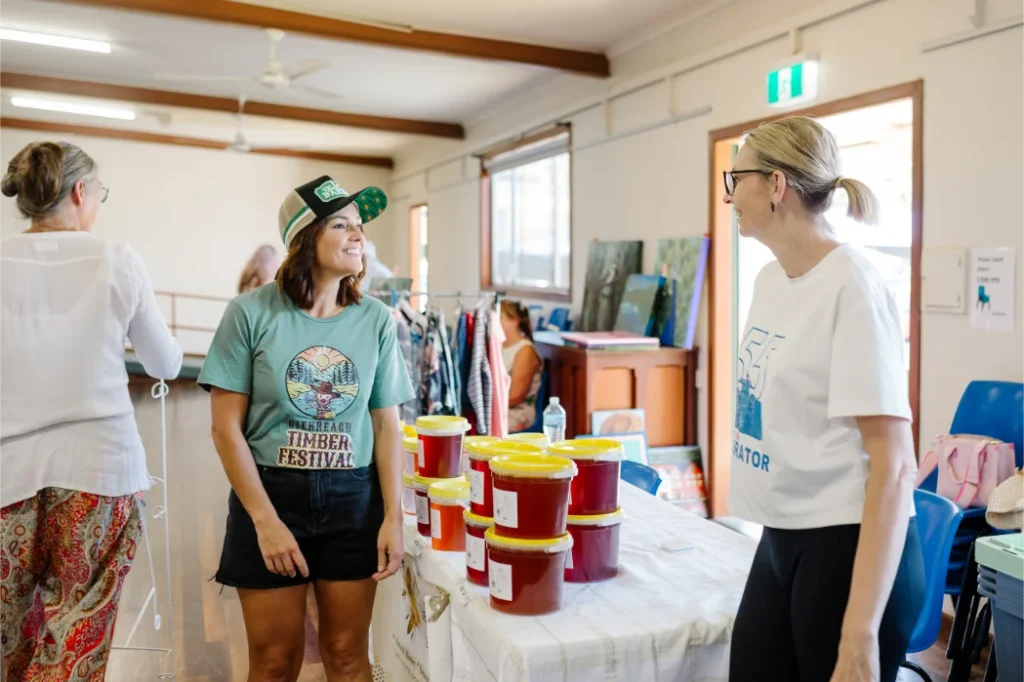
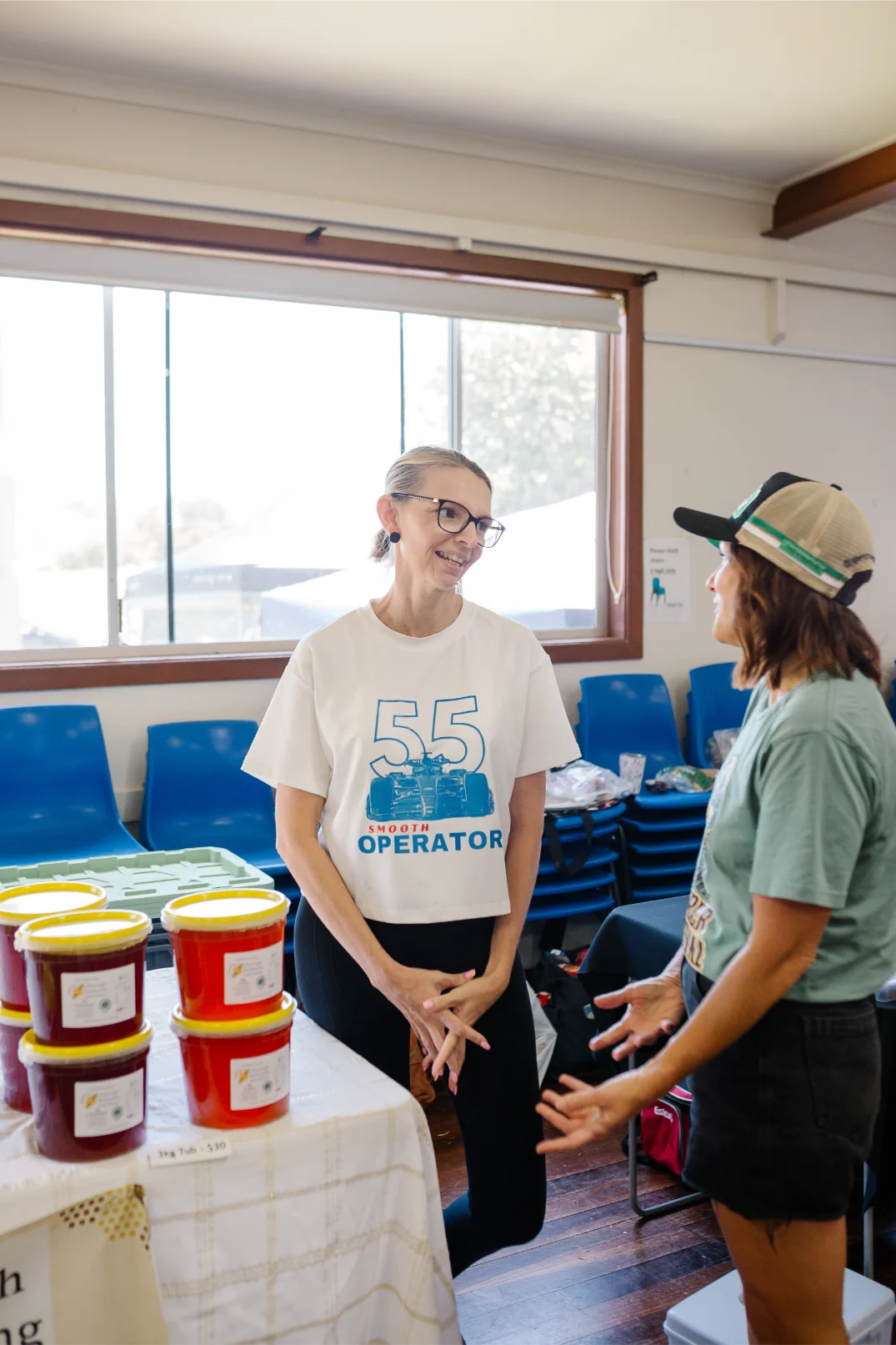
Long before Glenreagh Honey became a familiar stall at the festival, Sue-Ellen and her family were regular visitors, spending the day exploring the displays, watching the competitions and catching up with friends.
Today, she’s still there each year.
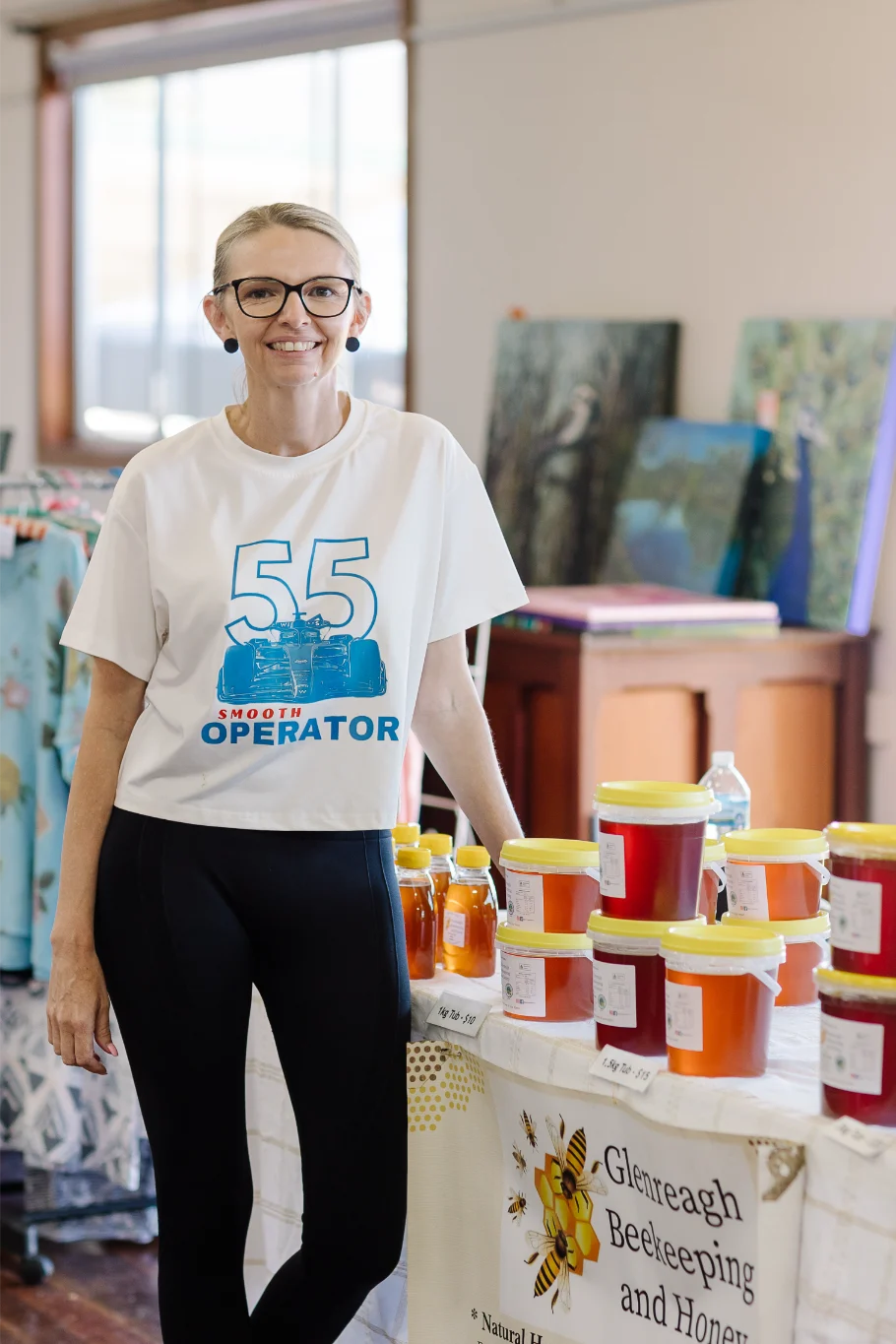
Only now, she’s sharing a product that carries its own story of heritage, hard work and connection to the region.
Behind every jar of Glenreagh Honey is a long history of beekeeping.
Sue-Ellen’s husband, Damien, comes from a family with generations of experience in the industry. His father was a fourth-generation beekeeper, passing down knowledge and skills that have helped shape the family business today.
Following his father’s passing, Sue-Ellen and Damien took on the responsibility of continuing that legacy.
And they’ve done much more than continue it.
They’ve grown it.
Today, Glenreagh Honey manages hundreds of hives spread across the region, from Glenreagh and Grafton through to Hungry Head and the Coffs Coast.
The hives move throughout the year, following flowering seasons and ensuring the bees can access the best available forage.
It’s a business built on understanding the landscape and working alongside nature.
While beekeeping and timber might seem like very different industries, Sue-Ellen sees plenty of connections.
Damien has spent many years working at Coffs Harbour Hardwoods, and Sue-Ellen now works there too.
“Being a beekeeper, you also have to know a lot about timber,” she says.
Both industries rely on understanding the natural environment.
Both require practical skills passed down through generations.
And both have helped shape life in regional communities like Glenreagh.
That’s one of the reasons the Glenreagh Timber Festival feels like such a natural fit for Glenreagh Honey.
The festival isn’t just connected to Sue-Ellen through her business.
It also carries treasured family memories.
Before becoming involved as a vendor, Sue-Ellen’s father regularly attended the festival as part of a local car club.
Between 2014 and 2016, he proudly displayed his Torana among the festival attractions.
Today, Sue-Ellen is the custodian of that vehicle and the memories that come with it.
“It’s a lot of responsibility,” she says with a smile.
The car remains a reminder of family traditions and the experiences they shared together at the festival.
For years, attending the Glenreagh Timber Festival was something the whole family looked forward to.
Her sister and extended family would come along, spending the day together and creating memories that still endure today.
Ask Sue-Ellen about her favourite part of the festival and her answer might surprise you.
It’s not the markets.
It’s not the machinery.
And it’s not even the honey.
It’s the working dogs.
As the owner of a Border Collie herself, Sue-Ellen loves watching the dog demonstrations and seeing skilled working dogs doing what they were bred to do.
“It’s just nice to see them in action,” she says.
Like many visitors, she appreciates the opportunity to experience authentic country life and rural skills up close.
For Sue-Ellen, one of the most important roles of the Glenreagh Timber Festival is introducing visitors to life in regional Australia.
Many people travel from larger towns and cities to experience something different.
The festival gives them the chance to see woodchopping, browse local stalls, meet producers, watch working dogs and experience the atmosphere of a country community coming together.
“The kids have a ball,” she says.
And that’s part of what makes the event so special.
It creates experiences that families remember.
While Glenreagh Honey is now a regular part of the festival, Sue-Ellen still views the event through the eyes of a visitor.
She understands what makes people return year after year.
The traditions.
The community.
The familiar faces.
The opportunity to spend a day celebrating the industries and lifestyles that have shaped the region.
As the Glenreagh Timber Festival approaches its twentieth year, Sue-Ellen’s story reminds us that heritage isn’t only found in museums or history books.
Sometimes it’s found in a family recipe.
A working bee hive.
A treasured Torana.
Or a jar of local honey shared with friends.
And like the festival itself, those traditions continue to be passed from one generation to the next.

When Wilma arrived in Glenreagh in 1960 as a young schoolteacher, she could never have imagined she would spend the next six decades helping shape the community she had come to love.

For Will Mackie, the Glenreagh Timber Festival isn’t just an event. It’s where passions become connections.

Not many people swap the rock-and-roll industry in London for cattle paddocks in Glenreagh. But that’s exactly what Tristan did.